Privacy-friendly alternatives to Google that don’t track you.
Tag: Google
Google was once a great service of all things internet, sadly this is not the case anymore. Please check out https://nomoregoogle.com/ for alternative services.
Typecatcher
Google fonts on Linux.
lmgtfy.com
Let me google that for you
google.com/insights/search/
Google Insights for Search, you can compare search volume patterns across specific regions, categories, time frames and properties.
Continue reading
code.google.com
Google code homepage
How A2A is Building a World of Collaborative Agents
Celebrating the first anniversary of the Agent-to-Agent (A2A) protocol, this blog post highlights how the framework enables autonomous AI agents to securely collaborate and hand off tasks without the rigidity of traditional APIs. By delegating complex workflows to specialized peer agents, A2A prevents context pollution, ensures data privacy, and simplifies application design through modularity. To demonstrate this ecosystem in action, the post spotlights FoldRun—an agentic interface for life sciences that orchestrates complex protein structure predictions—alongside diverse A2A use cases spanning commerce, data streaming, DevOps, and telecommunications.
The latest updates to Google Pay
Google Pay is evolving for "agentic commerce" by introducing the Universal Commerce Protocol and a new MCP server that allows AI agents to manage integrations and analyze trends. New Android updates introduce dynamic callbacks for seamless express checkouts and extend payment support into social media apps via WebViews. Additionally, the platform is launching cross-device biometric authentication and new transaction signals to help merchants reduce friction and optimize processing costs.
Blazing fast on-device GenAI with LiteRT-LM
Google AI Edge’s LiteRT-LM provides a production-proven, highly optimized infrastructure for running Gemma 4 across cross-platform mobile and edge environments. It actively unlocks the model's native multimodal and agentic features on-device by utilizing memory-efficient dynamic loading, Multi-Token Prediction for up to a 2.2x speedup, and advanced orchestration tools like Thinking Mode and Constrained Decoding. Furthermore, the engine is rapidly expanding its integration surfaces beyond Android, introducing new native Swift APIs for Apple ecosystems and WebGPU-accelerated JavaScript APIs for high-performance, serverless browser inference.
All the news from the Google I/O 2026 Developer keynote
Google announced the transition from assistive AI to independent agents, highlighting the launch of the Gemini 3.5 series and major updates to its Antigravity agent-first development platform. For mobile developers, the post introduces new Android CLI tools, the Android Bench evaluation leaderboard, and an automated Migration agent designed to rapidly convert various frameworks into native Kotlin code. Web development is also being transformed through Chrome DevTools for agents, the HTML-in-Canvas API, and the proposal of WebMCP, an open web standard that enables browser-based AI agents to execute complex tasks.
One Year of Innovation: Celebrating 100k Members in the Google Cloud x NVIDIA Developer Community
The Google Cloud and NVIDIA developer community is celebrating its first anniversary with 100,000 members and a renewed focus on providing builders with advanced AI infrastructure and resources. To accelerate development, the community offers curated learning pathways for mastering LLM optimization, GPU-accelerated data analytics, and monthly expert-led webinars. Moving into its second year, the initiative will expand to include hands-on labs, engineering events, and specialized content focused on the growth of agentic AI.
An important update: Transitioning Gemini CLI to Antigravity CLI
Google is unifying its AI terminal tools by transitioning the community-focused Gemini CLI into Antigravity CLI, a new agent-first platform built for complex, multi-agent workflows. This new Go-based tool offers faster execution, asynchronous processing, and a unified architecture that syncs with the Antigravity 2.0 desktop application. While enterprise customers will maintain existing access, individual and free users must transition to the new platform before Gemini CLI stops serving requests on June 18, 2026.
Empowering Service Providers and Hardware Partners with Gemini for Home
Google is expanding its smart home ecosystem by launching a full-stack Gemini AI offering that integrates advanced camera intelligence, natural language queries, and daily activity summaries. This initiative provides service providers and hardware manufacturers with turnkey reference designs and APIs to build proactive, branded services without extensive research and development. Ultimately, the program aims to move beyond basic device control toward an AI-native home that can understand context and care for users' needs in real time.
Announcing ADK for Kotlin and ADK for Android 0.1.0: Building AI Agents on Android and Beyond
Google has announced the launch of version 0.1.0 of the Agent Development Kit (ADK) for Kotlin, alongside a specialized ADK library for Android. This open-source framework simplifies the creation of AI agents by managing complex orchestration, session sharing, and error handling across cloud and edge environments. The release supports hybrid orchestration, enabling developers to build multi-agent systems where a cloud-based model can seamlessly offload specific tasks to local, on-device models like Gemini Nano to enhance user privacy.
Enhancing Android Checkout with Dynamic Callbacks in Google Pay
We are excited to bring Express checkout with Google Pay for Android native apps enabling developers...
Supercharge your integration workflow with the Google Pay & Wallet Developer MCP server
Google has announced the new Google Pay & Wallet Developer MCP server, an open-standard tool designed to securely connect AI development assistants and IDEs with real-time API and account context. The server allows developers to remain within their development environment to search official documentation, validate Wallet pass definitions, check integration status, and manage merchant accounts. Ultimately, this integration aims to reduce friction and accelerate development workflows by minimizing context switching and providing up-to-date, grounded AI support.
googleblog.blogspot.com
The Official Google Blog
Powering the world’s first AI arts museum
18 June 2026 @ 3:00 pm
 Refik Anadol Studio opens Dataland, the first museum of AI arts, powered by Google Cloud and supported by Google Arts & Culture.
Introducing Ask Ad Manager, the AI agent that will help you get more done
18 June 2026 @ 1:00 pm
 Our AI agent, built with Gemini, helps publishers get deeper insights, understand their performance and make better decisions faster.
Splash Canvas: Create abstract art (with an attitude)
18 June 2026 @ 10:00 am
 Splash Canvas lets you create abstract art using unconventional, highly opinionated sea creatures.
How universities are preparing students for an AI-powered future
17 June 2026 @ 4:00 pm
 Here’s how U.S. universities are using Google’s AI tools in innovative ways.
New research shows how AMIE, our medical AI, could help manage health conditions.
17 June 2026 @ 3:00 pm
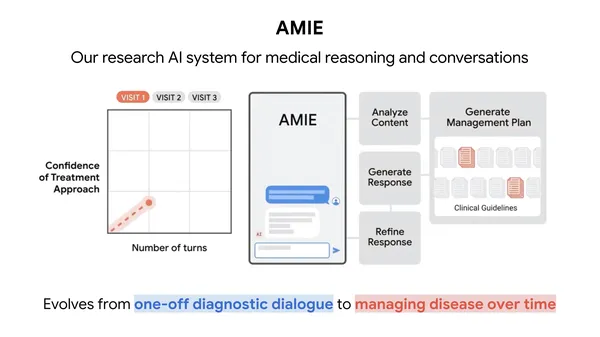 Research in “Nature” shows our conversational AI system matches primary care physicians in complex disease management.
Meet the new Google Home Speaker, built for Gemini
17 June 2026 @ 1:00 pm
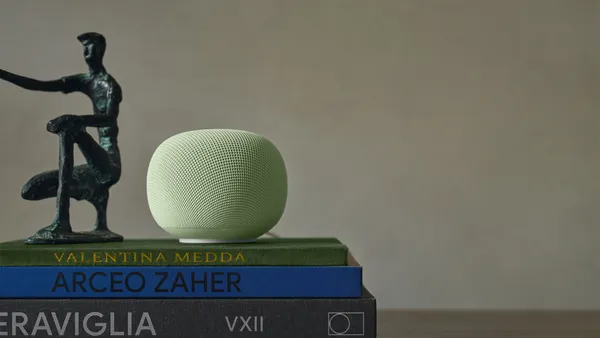 Meet the Google Home Speaker for Gemini. Control smart home devices, manage routines, and get fast answers using natural language.
We’re expanding our support for breakthrough carbon removal technologies.
17 June 2026 @ 1:00 pm
 By renewing our support for Frontier, we are advancing a portfolio that tackles emissions at every timescale.
Drive with “Minions & Monsters” on Waze.
17 June 2026 @ 11:00 am
 Ready to inject some joy and mischief into your summer commute? Waze is bringing the world’s favorite cheerful troublemakers back to the passenger seat, just in time for…
Scaling the UK government’s AI vision
17 June 2026 @ 7:00 am
 Today at the Google Cloud Summit London, we discussed why Google Cloud is the foundation for the UK government’s Augmented Planning Decisions tool.
June Pixel Drop: New features for creators, Gemini upgrades and more
16 June 2026 @ 6:00 pm
 Get new screen recording feature, text-to-video tools with Gemini Omni, and better multitasking on your Pixel devices.
mail.google.com
GMail login – Google’s free internet email account
docs.google.com
Google docs – online word, office & spreadsheets
Youtube.com
Youtube (Google) generation video community, with a bias for corporate censorship.
feedburner.google.com
Keep track & burn your RSS feeds